

Miss Matcha Discovery Collection
Miss Matcha Discovery Collection
Regular price
130.00
Regular price
Sale price
130.00
Unit price
per
Shipping calculated at checkout.
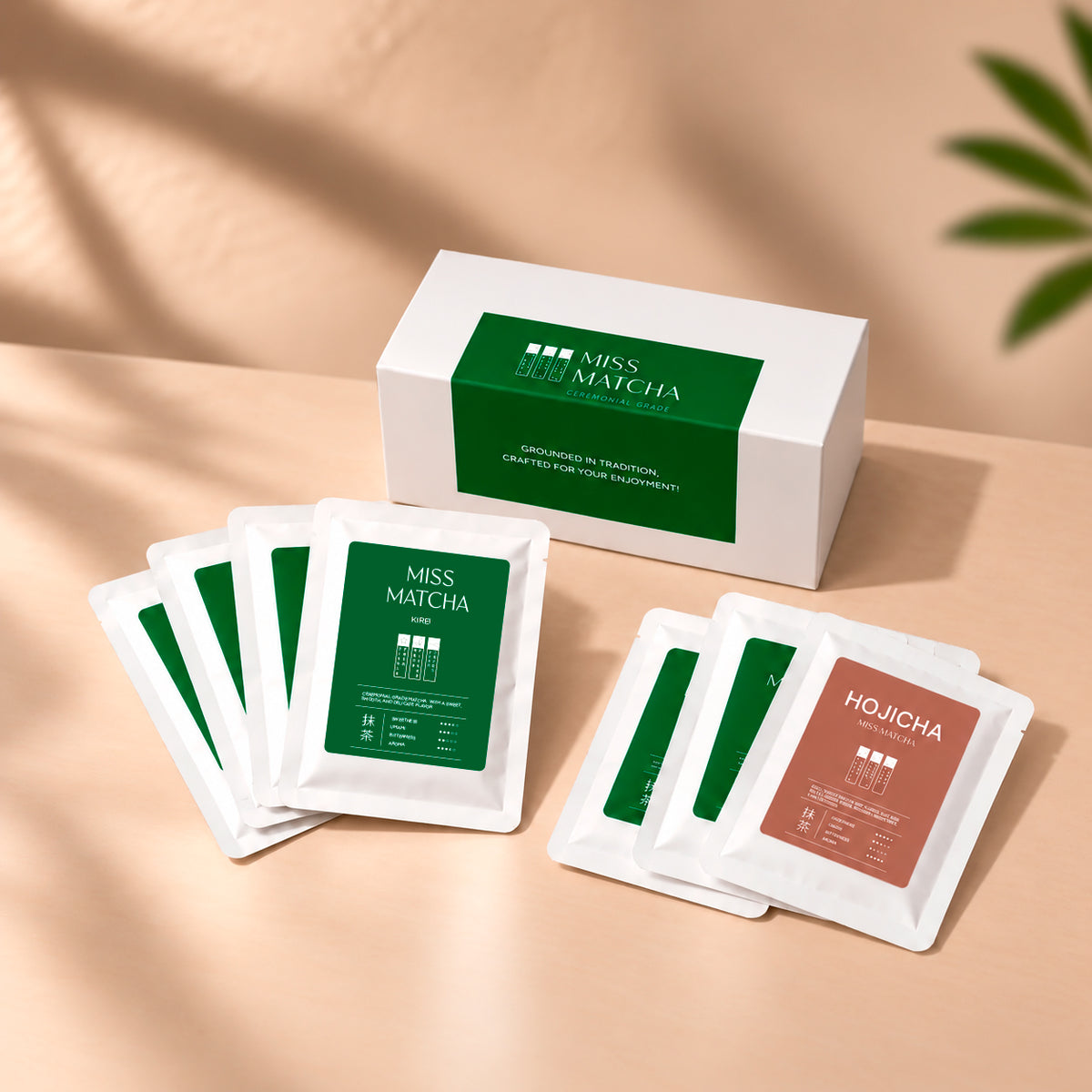
Meet the full Miss Matcha range in one collection.
The Discovery Collection brings together our ceremonial matcha and roasted Japanese hojicha in individual 10g pouches, giving you the chance to taste each selection before choosing the one you want to return to.
Whisk them with water, prepare them with milk, or taste them side by side. A simple introduction to Miss Matcha, one pouch at a time.
Inside the Collection
Heavenly · Ceremonial Matcha · 10g
Iki · Ceremonial Matcha · 10g
Miyabi Kagoshima · Ceremonial Matcha · 10g
KIREI Kagoshima · Ceremonial Matcha · 10g
Kasumi · Ceremonial Matcha · 10g
Hikari· Ceremonial Matcha · 10g
Hojicha · Roasted Japanese Green Tea · 10g
Couldn't load pickup availability
Sift 1-2 tsp of matcha into a bowl. Add 60ml of hot water (80°C). Whisk vigorously in a zigzag motion until frothy. Enjoy as is or add milk for a latte.
Store in a cool, dry place away from direct sunlight. For best results, keep refrigerated after opening and consume within 3 months.
Free delivery across the UAE on orders of AED 250 or more. Standard delivery takes 24–72 hours, depending on location.